Upgrading the Drag and Servicing an Abu Revo

Today I thought I would explain how to upgrade the drag on a Abu Revo Skeet and seeing how I’ll be tearing it down I figured I might as well service it at the same time.
I’m going to try something a little different, this post will be a video post, hopefully this will work. By the way, just a warning, the video is almost 30 minutes long so it might take a few minutes to load up so please be patient. Also, if you double click the video you can view it in full screen mode.
Disclaimer: Any servicing you do to your reel you do so at your own risk and I will not be held responsible for any damage caused.
One trick I thought of after making the video is after you remove the cover take a few pictures of the internals with your digital camera. That way, in the event that parts fall out you can compare your pictures with the schematic and you should be good to go.
Well, what did you think?
Thanks for visiting my site. Be sure to tell all of your fishing buddies and come back soon
Until Next Time, Good Luck and Tight Lines To Ya!
Revo, Low Profile Baitcasters:

Ever since I can remember I have been a Round Abu Garcia Reel man, I loved the tried and true design of the reels. Now don’t take that statement wrong. I still love and use my round Abu reels, especially my Abu Morrum’s but this is not about them, its about the new Abu Revo low profile baitcasters.
Not to long back, I believe it was around 2006 Abu Garcia introduced its new line of low profile baitcast reels. There is the Revo S, Revo SX, Revo STX, Revo Winch, Revo Skeet, Revo Premier, Revo Inshore and Revo Toro.
I personally think that Revo reels are kind of cool looking, and the specifications on them are pretty impressive as well. They all come with the following, an oversized main drive gear and X-CrafticTM aluminum alloy frame that provides corrosion resistance, which Abu says will stand up to salt water use. High Precision Corrosion Resistant ball bearings for smooth casting and retrieving and world renowned Carbon MatrixTM drag system which they claim will generates up to 24 lbs. of drag, precision machined DuragearTM brass gears for torque, and a six-pin centrifugal braking system. The STX series also adds a Linear Magnetic BrakeTM system. Most Revo models are available in either right or left hand retrieve depending on your needs. The High Precision Corrosion Resistant Stainless Steel ball bearings range from 6 in the Premier series up to 11 in several other series.

Another thing I love about the Revo reels is the way Abu stayed with its simplistic design making it easy to service yourself. Basic cleaning oiling and greasing is very straight forward if your even just slightly mechanically inclined. If you want to upgrade the ball bearings to say an ABEC 5 if your not comfortable doing it yourself you might want to consider having it professionally done.
I can only write a review on the Revo series reels that I currently own. As of the writing of this I have the STX, Skeet, Winch and Inshore versions, all of which I love. They all cast effortlessly, are smooth as silk in their cast ability as well as retrieve. The STX series reel which is silver and its close cousin the Skeet version, which is basically an STX in Yellow and Black with a few slight differences are a couple of my favorites. One very noticeable aspect of these reels is the ported gold spool which is kinda cool looking in my opinion. They added an oversized handle as well. Abu basically kept the same design of the tension knob and star drag, they just upgraded them somewhat. The STX is available in two different gear ratios, 6.4:1 and 7.1:1 whereas the Skeet is only available in a 6.4:1 ratio.
The Revo Winch has 11 ball bearings and is geared lower than other Revos, 5.4:1 which Abu says is designed for retrieving deep diving crankbaits as well as pulling big fish out of heavy cover. I like to flip jigs and Senkos with mine as well as throw crankbaits or slow roll spinnerbaits
Next is my In Shore version, it comes with 7 ball bearings and a 6.4:1 gear ratio and additional power handle for use in salt water applications. It also holds more line than the other Revos, I’m guessing this is for the times when you need more line because you hook into a big hard fighting fish that will pull the 24 pounds of drag pressure without much trouble. I like to use mine primarily when I go striped bass fishing and I’m doing the bait and wait thing with anchovies or throwing Hawg Raiser jigs at them.

The only negative things I have noticed about them is number 1, Abu seems to not oil and grease them very well when you buy them new, this is not really a big deal seeing how all you need to do is un-screw one thumb screw to remove the side cover and add some oil to the bearings and grease to the gears, which only takes a few minutes. Number 2 is the fact that they are no longer made in Sweden. While I have not personally noticed that they are an inferior product now that they are made in Korea instead of Sweden, I know that the older Swedish made Abu’s last forever, only time will tell with the Revos but I can say that I use mine a lot and they have shown no sigh of being inferior.
As I mentioned earlier I do like my Revo reels and I would recommend them to anyone looking to get a nice low profile reel.
Thanks for visiting my site. Be sure to tell all of your fishing buddies and come back soon
Until Next Time, Good Luck and Tight Lines To Ya!
Fishing Reels, more in-depth, Part 2:
Ok, let’s see where did I leave off?? Oh, that’s right, I talked about the spin cast and spinning reels now I’ll talk about the bait casting variety of fishing reels.
Bait casting reels. There are a few different type’s of reels that fall into the realm of bait casting reels. There are the ones with level winds, which I feel are much better than the ones without a level wind, I’ll explain more later. You also have the 2 speed type, which are primarily in salt water applications, I wont go into too much detail but the 2 speed reels have a high speed setting for a fast retrieve and a lower gear ratio for hauling in that big ole fish.
To spool up a bait casting reel is very simple. You don’t need any specialized equipment, as a matter of fact a regular ball point pen works fine. Take your pen, poke it through the middle of the spool, attach the line to your reel, place the pen between your toes with the spool in the middle and reel the line onto the reel with the line exiting off the top of the spool, so the spool is actually rolling towards you. When the line is within about ½ to ¼ of an inch from the top its full. Another tip, follow the manufactures suggestions.
One tip with spooling up any reel was handed down to me by my father. While he loved to fish we were by no means rich and even though dad didn’t have the luxury of having a sponsor he would only purchase quality brand line. To save money we would leave some backing on the spool when we replaced line. All this means is when replacing line just remove about half the old line and fill it up with new line. Think about it for a second, no matter how long of a cast you make, the line half way down the spool will not ever see the water so its basically wasted.
When your spooling up is one of the times when having the level wind makes it really nice but in my opinion when your fighting a fish is the time your most thankful for that level wind because you don’t have to concentrate on moving the line back and forth with your finger so it lays on the spool evenly instead of bunching up on one side or the other. As far as I know all of today’s bait casting reels designed for bass fishing do have the built in level wind.
Bait casting reels have come along ways, even since I started using them. The basic ideal of them is a spool that spins on an axis with sealed ball bearings located at least on both sides of the axis. Back in the old days they had bushings instead of bearings, heavier parts and older technology so the reels were not nearly as light and smooth as today’s high tech reels.
One thing I always tell people who want to get one of these reels is to be sure to get a quality one because the cheaper ones are allot more difficult to learn with because they just are not as well built as the cheaper ones. I have more than once had people tell me that bait casters suck and then I’ll let them try one of mine and then they are amazed at the difference between the 2. Its then that they realize quality does make a difference.
Some people think that a spinning reel can out cast a bait casting reel. Maybe this was true back in the older days but it is no longer the case. Today’s reels are capable of casting very light lures along distance. Bait casting reels are however a little more difficult to master but with the advancement of technology of today’s reels it’s a whole lot easier than it used to be however, even with all the updates the term backlash is still a common term with bait casting reels, especially when you try casting into the wind. You must train your thumb to know when to apply pressure onto the spool to slow it down or even stop it when need be.
The technique to cast a bait casting reel is basically the same way as with any other rig. You push and hold the button, bring the rod back over your shoulder and swing forward. Just like other rigs you swing your arm forward and release the line at about the 2:00 position. Now comes the tricky part.
You attempt to make a 50 yard cast however something happens that makes the cast fall considerably short of your intended distance, wind, you released the line to late, whatever. The spool is spinning like mad and you must stop it from continuing to spin or you get what’s called a back lash, or in fishermen’s terms, a professional over run. This is when the spool keeps spinning but the line is no longer going out the end of your rod tip. Trust me, this is not a good thing. You look down at your reel and it’s a mess. This mess is often referred to as a birds nest. Yes, it tends to resemble a birds nest.
When you get one of these you basically have just a few options. If its not all that bad you might be able to pick it out. This can be quite a pain and depending on if the line came to an abrupt halt you might have damaged the line and even though it might appear the line is Ok, by the way, what I’m about to say is from personal experience, you can make a cast, hook a nice fish and the line breaks. Of course this seems to happen most when your in a tournament and that fish that just broke your line with your favorite Lucky Craft crank bait in his lip would have won you the tournament. That is when you wished you had taken the other option to dealing with the bird nest.
The other option I’m talking about is if you have a few rods available to place it into the rod locker, wait until you get home and replace the line then or if you don’t have an arsenal of rigs at your disposal then replace the line right away. Yes, it is can get a little expensive but trust me when I say that the price is more than worth the frustration of breaking a fish off, especially if it’s the fish of a lifetime.
There are a few other ways of using bait casting reels, these are a little more specialized ways of utilizing your reels. Flipping, pitching are 2 techniques that come to mind. Both of these techniques are similar yet different. In flipping you using a set amount of line and fishing pretty close to your targeted spot. Basically you peel off all the line you need, click your reel to engage the spool, and flip your offering into the spot underhanded with a low trajectory so it enters the water quietly.
Pitching on the other hand you do with the line free spooling so you can toss it a little further than flipping but not a real far distance like a normal cast. This is still considered a stealthy technique because it is executed underhanded with a low trajectory just like flipping. In order to utilize this style of fishing you need to have a decent quality reel or you will be picking out back lash’s all day long. Another trick to pitching is to peel off about 20-30 feet of line, maybe a little more depending on the distance you will be pitching, and place a piece of tape on your line. This will only allow so much line to come off the spool therefore if you do get a backlash you will only have to cut off the pre-determined amount of line.
Thanks for visiting my site. Be sure to tell all of your fishing buddies and come back soon
Until Next Time, Good Luck and Tight Lines To Ya!
Fishing Reels, more in-depth, Part 1:
Spin Cast reels, Spinning reels, Bait Casting reels, Level Wind reels, AHHHHH! It can all be so confusing for some people. Why so many choices? Which one is right for me? I went over the basics of reels in another post now its time to dig a little deeper.
Seeing how I’ll be going considerably more in-depth into reels I’m going to break this up into 2 different posts. I’ll start out talking about the good old Spin Cast Reels. Chances are this is the type of reel a lot of us first started fishing with. The spin cast reels are very simplistic in design thereby making them very easy to use. Basically you push and hold the push button, bring your arm back, swing it forward, release the button when the rod tip is at about the 2:00 position and out goes the line. That is one of the big reasons kids love spin cast reels, they can be cast a long distance, which kids really enjoy and at the same time they are very easy to use
I know my first reel was a Zebco 202, which I already mentioned. This reel is ok if your doing basic stream type trout fishing or sunfish but it will not stand up to the rigors of big trout or bass fishing but the bottom line is that it was not designed for that. In my opinion, it’s just a great starter reel. There are other spin cast reels that are of a higher quality that will stand up to any fishing situations. Once again, in my opinion the Zebco 33 falls into that category.
Now let’s move onto the spinning reel. Also known as open faced reels because unlike the spin cast reels the spool and line is exposed. With a little practice these reels are quite easy to master and like the spin cast reels you can cast light stuff, lures, baits etc., a long ways. Basically the only difference in casting between these reels and the spin cast reel is your finger. You grab and hold the line with your index finger, flip open the bail, the little metal hoop that holds the line and cast the same way as describer above releasing the line at right about the 2:00 position.
I remember quite a few years back when dad and I went fishing on San Carlos Reservoir, located on the San Carlos Indian Reservation in Arizona. I watched the locals catching fish with line wrapped around a tin can. They would make side armed casts and were able to cast quite the distance and then fight the fish by winding the line back onto the can. Me of course forever seeking knowledge, I questioned him because I was very curious. He explained that he could not afford the fancy rod and reel setup I had but he made due with what he had. It was then that I discovered that the Spinning reel design is very similar in design to the basic rig he was using. It also made me realize that one does not need the latest and greatest tackle to be a good fisherman, but it sure is nice and makes fighting fish much easier when you at the very least have a rod to assist in fighting the fish.
Spinning reels are available in a wide variety of sizes and actions. Everything from ultra light models designed for 2-4 pound test line to extra large models that are made for deep sea fishing with heavy line. I prefer to use a spinning reel when trout fishing, finesse bass fishing with small baits and light lines. A couple techniques that fall into this catagory are split shotting and drop shotting, which I discussed in other posts. Spinning reels are also an excellent choice when the crappie bite is on. While I primarily fish with a bait casting reel I do have a few spinning reels in my arsenal.
Whew, I hope I didn’t bore you too much and you actually gained some knowledge concerning the reels I talked about. Be sure to check back soon when I’ll discuss the bait casting type reels.
Thanks for visiting my site. Be sure to tell all of your fishing buddies and come back soon
Until Next Time, Good Luck and Tight Lines To Ya!
Rods and Reels 101:
Rods and reels, can a person have too many?
I don’t think so but then again I’m not your normal person. I probably think about fishing at least 100 times a day, even while at my normal 9-5 I constantly think about ways to compare work subjects with fishing ones.
In this post I’ll talk about the basics of rods and reels, their general uses and applications. I’ll start out with the reels then move onto the rods.
Reels

Spinning Reels, vary in size from the TinyLite up to the Big Saltwater Saltiga BlastReel. Hold the line, open the bail, as your casting let loose of the line.
These are easy reels to master and are widely used in a variety of applications. They work very well any time a light line presentation is needed, be it for trout fishing as well as split shotting for bass the spinning reel is the go to reel for these applications.
Baitcasters are designed for small light weight finesse type lures to the big ocean reels. These are the most difficult to master.
Professional Over run, aka backlash, this is when the spool continues to spin but your lure stops and it causes a big Birds Nest in your line that can be a real bear to try and pick out. Most of the time if you do manage to pick it out because the line had been kinked it will weaken the line.

A Baitcast Reel is generally used for heavier type lures or baits but with technology today they make them where you can cast ultra light lures into the wind with out any backlash, you will however pay a premium price for these reels.
BaitCasters are used mostly for bass fishing as well as inshore applications. If your deep sea fishing I would recommend getting a level wind reel, which is similar in looks to a baitcaster.

Spincast Reels are basically trouble free. With a spincast you push and hold the button, swing your arm and release the button, just don’t release the rod!
These reels are probably the easiest ones for kids just learning to fish to use. Chances are that a lot of you started out with this type of reel.
I remember when I was a kid the little black Zebco 202 was my first reel. Actually my first 2 reels were the 202’s followed quickly by the Zebco 33. Let me explain.
When I first got the 202 I went fishing at a pond in a city park, Randolph Park in Tucson Arizona to be exact. In this pond they had some bass and big ones at that.
I remember catching several nice bass one that weighed over 6 pounds. The 6 pound bass just gutted my drag gears, they were plastic.
Anyhow, I returned the reel to Kmart and they gave me another one just like it. The following weekend the exact same thing happened with a bass that weighed over 7 pounds.
When I returned that one they gave me a refund and I moved up to the Zebco 33.This reel is a great reel that will last many years with just minor service. I know mine served me well for quite a few years.
If you take kids fishing and give them a spincast reel to use chances are that you will be able to fish as well. The kids will enjoy fishing because like I said, these reels are pretty much trouble free. Think about it for a second, almost all of the kid novelty type rod and reel setups are the spin cast reels.

Then you’ve got your Fly Cast Reels. These outfits are used primarily for casting hand tied bug and minnow imitations.
Of course these lures basically consist of a hook covered with some kind of dressing so they tend to be very light. Therefore you actually use the weight of the line to cast your offering.
In the past these outfits were basically exclusive to trout fishermen but now days they are commonly used by bass fishermen as well as deep sea fishermen.
Rods
Of course for each different type of reel there is a different type of rod. Well, that’s not 100% true …
The Bait Cast and Spin cast rods are pretty much interchangeable, the only real difference being that the Spin Cast Rods usually have just a pistol grip whereas the Bait Cast Rods do have a pistol grip they also have quite a wide variety of different handle lengths.
Bottom line, the longer the handle the more leverage it will provide On these type of rods the line eye guide are all small. From the closest to the reel to the rod tip they are all small, or at least allot smaller than the ones you will find on a Spinning Rod The reason for this is because the line comes off the reel in pretty much a straight line. The reel seat on these type of rods differs from those on a spinning rod.
Next you have your Spinning Rods. These will usually have a straight handle. The line eye guides will start out big and progressively work down to small at the tip. The reasoning behind this is because on a spinning reel the line comes off in a loop so the first eye guide it meets should be bigger allowing less friction which in turn allows for longer casts. As the guides get progressively smaller it is straightening out the line.
Fly Rods are very long with a very light action. Because your using light line or leader with these rigs your rod plays a very important part in fighting out the fish. You will never be able to horse a fish with these rigs because of their light action.
As far as how long of a rod do you need, that all personal preference. There are several factors to take into consideration, what type of fishing are you going to be doing, what kind of lures are you going to be using and of course what feels comfortable to you personally. This would hold true for any type of rod you are considering.
As far as which action rod you need, again, it depends on what your fishing with and for. Of course you wouldn’t want to use an Ultra Light rod when flipping jigs into cat tails and by the same rule you wouldn’t want to use a heavy action Flipping stick for trout fishing. Look at the rod and the line and lure weight ratings listed on it and purchase accordingly.
Sure, there are a bunch of specialty rods on the market, just in the bass market alone, a person could easily go to the poor house. There are everything from Drop shot, spinner bait, crank bait, flipping, the list is endless. If you don’t have a lot of cash or just don’t want to have a whole mess of rods a good general purpose rod would probably be a 6-6.6 foot medium action one. With that action rod you can fish for just about all species of fish, from trout and pan fish to bass and bigger.
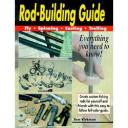
| As far as the price goes, you can buy your basic discount store brand or get into the custom made rods. Custom made rods usually are a better quality rod in how they are made as well as the supplies used, they do come at a premium price though.Then again you can build your own. I won’t go into much detail here because there is a lot of information needed to perfect this. Ican say that I don’t have much knowledge in this department. If however your interested in building your own rods a must read is Tom Kirkman’s Rod Building Guide: Fly, Spinning, Casting, Trolling Of course there are a lot more books out there but this one is a great starting point. One of the nicest things about building your own rod is just knowing that you made it yourself puts a smile on your face. |
Well, I believe that I have at least touched on the basics of rods and reels. Hopefully you gained some knowledge reading this.
Thanks for visiting my site. Be sure to tell all of your fishing buddies and come back soon!
Until Next Time, Good Luck and Tight Lines To Ya!
[tags]Rods and Reels, Baitcast Reels, Spinning Reels, Fly Cast Reels[/tags]