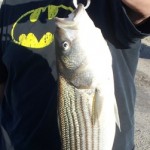
Fishing for a Predator
Recently I met a fellow bass fisherman named Evan Schaible. After a brief conversation with him I knew he was a very knowledgeable bass fisherman so I asked him if he would consider sharing some of his tips and be a guest writer on my site, which is something I have never done in the past. At first he seemed a bit reluctant but finally figured he would give it a try. After I read the draft he sent me I was happy he decided to give it a try.
With that being said I give you Fishing for a Predator by Evan Schaible.

“It is no mystery that largemouth bass love to hide and ambush prey. This is because bass are predators by nature. It will drastically help our fishing when we thoroughly digest this fact, and fish accordingly. Many people who are new to the bass fishing arena tend to ease their way in by passively fishing as if the bass will help them get a limit. This is the reason why many people are discouraged at the sport.”

“When you approach this type of fishing you can’t just rig up a night crawler, drop it in the water and wait. You have to be just as aggressive as the bass in order to be successful. But this aggression must be accompanied by the proper knowledge, or you will end up just as frustrated as the guy who rigs worms and sits back with a soda waiting for the bobber to bounce. Float fishing is good, don’t get me wrong; but if you are serious about catching a few more bass each time you go out, than you have to fish for the predator.”

“What does it mean to fish for a predator? Bass fishing is a bit like hunting in that most of your time will be spent stalking the bass. But in elk hunting for example, you are acting as a predator stalking a prey animal. So often times fisherman can mistake what they are looking for on the water for being something that is prey (for us it is prey, that’s true). But in the freshwater food chain bass are among the top few hunters in the water, therefore making the methodologies we must employ drastically different than if we were hunting a prey animal. So in the remainder of this article I want to focus on a few techniques and tips that can help you catch the predator.”

“One key thing to remember is that you are not the hunter when you are bass fishing. You are in fact acting as the prey. This is integral, and cannot be stressed enough. We can talk about pitching into cover, and jigging a crawdad, but what we have to keep in mind is the fact that we are trying to impersonate something that the bass are in fact hunting already. So we can either have this working against us, or use it to our advantage. It can work against us if we fish in a way that makes the bass look elsewhere for food. Like any other predator the bass are not going to be as interested in prey that is large and perfectly healthy, and here is a prime area where many anglers fail. If you are fishing a crank bait for example, what you don’t want to do is pull it on a steady retrieve through the cover, missing everything that’s around you. This sends the signal of a healthy, mature prey animal that the bass will likely not be interested in.”

“The key to triggering strikes when fishing baits that are meant to resemble prey animals (shad, blue gill, crayfish, worms, etc.) is to make the bait look injured. This may seem fundamental, but it is often overlooked and taken for granted by many fishermen. This is the reason for bait patterns like the bleeding shad, as the bass, like any other predator, is attracted first to the wounded animal. Wounded animals are just easier meals, and in order to heighten our success as anglers we have to take advantage of this predatory nature inherent in bass. So when fishing cover keep this in mind. If you are throwing a spinner bait, bounce it off a log or stump and make the bass think that the shad you are impersonating is wounded.

The same applies for crank baits and jigs. Another useful method is stop and go retrieves with a little jerk in the middle. If you have a good crank bait you can even make it look like the little thing is injured by winding extremely fast for a couple of turns and the bait will almost roll over, signaling a weakness to the bass. There are innumerable ways to make your baits look injured, so take some time in shallow water and work on your presentations, it will pay off in the end I guarantee.”
“Another good thing to keep in mind is that bass are clever hunters, and love to ambush their prey. This again can be to our advantage or detriment. A lot of times anglers misjudge their target and fish open water, when there are great underwater structures, reed beds, grass lines, and other types of cover for the bass to hide in while waiting to ambush an unsuspecting shad. 
But you can’t just throw your bait at the cover and expect to get strikes, and here is another area where many fisherman fall short. There are a few key things to always keep in mind when fishing cover, and again, to understand why, we have to remember that bass are predatory fish.”

“Most of the time the bass will be on the edges of reed beds, just within the grass on a grass line, or waiting on the edge of stump or fallen tree. This is often as shelter for them as well, but the dual purpose of this is as ambush points. Again, you can’t just throw your bait at the cover and expect to succeed, you have to plan your presentation.
Take some time to practice laying your bait into the water as quietly as you can. While pitching a good way to achieve a quiet entry into the water is to slightly lift your rod tip just before the bait hits, and often this will just slide it into the water without hardly a ripple.
But again, the difference between success and failure is where you place the bait. Most anglers will cast just on the outside of the cover, and begin their retrieve. This leaves the lure in the strike zone for much less time, lessening your chances of getting a hit. If you are fishing grass lines, reed beds or other cover of this sort, cast into it as far as you think is safe, because your weed guards were made for just this occasion.
Also if you are fishing solitary bank cover such as a stump or fallen tree, cast just beyond your target and begin your retrieve. This will allow your bait to present its full action to the fish, and won’t just be getting started when it’s in the strike zone. This area of cover is extremely important, and bass are almost always using this method of hunting.” 
“Lions will often stalk water holes and wait for an animal to bend down and drink before attacking. This takes the animal off guard and gives the lion a brief window to get very close in order to strike. The same holds true for bass. This is the reason for the calculated action of many crank baits. This is, I think, the most overlooked way to fish a crank bait. What I mean is letting it bounce on the bottom so as to imitate a bait fish rooting and hunting for prey itself. As the little minnow shuffles by the ambush point of the waiting bass, the bass will almost strike on impulse as it passes.
These are what we call “reaction strikes”, and can be triggered in a plethora of ways. But the reason they are so crucial is because the bass will hit your bait without even thinking about it, because as a rule, when the specific scenario is played out, that means dinner. This rooting minnow scenario is one of those guaranteed meals for a bass. So when the little bait comes by and bumps that ambush point that bass strikes, and you have him. So don’t just fish your crank baits so they look like they are swimming or darting around, try this method and see how it works.” 
“You can also fish weedless rigged creatures baits, jigs, and spinner baits in this same fashion. And don’t mistake these techniques as only for searching the bass out, because you will drastically improve your cast/strike ratio if you consistently fish these styles, even if you think you have a good spot where the bass are biting your bait.
Presentation is literally everything in this sport, and the best actor will get the prize every time. 
So next time you are on the water, remember what you read here, and keep in mind that you are not hunting, you are baiting a predator into thinking he has a free , injured meal.”
Thanks for visiting my site. Be sure to tell all of your fishing buddies and come back soon
Until Next Time, Good Luck and Tight Lines To Ya!
Just a Handful
For those who might be on a limited budget, just starting out or just don’t want to carry a lot of tackle, today I’ll talk about a few basic items and how to use them that should make for a successful outing.
First off we have the Gary Yamamoto Senko If your only going to carry 1 color make it Watermelon/Black Flake. This is lure that I have no ideal what its supposed to look like. It kind of looks like a green cigar to me but for some reason the bass love them. Senko’s are designed as a “Do Nothing” lure, meaning you don’t need to impart any action, no twitching or jerking, you actually do nothing. They can be rigged a variety of ways but I’m only going to mention 2 of them.
First is the basic Texas style rigged with an X-Point 3/0 Off Set Wide Gap Hook. Then we have the wacky rig, which is basically just placing a hook through the middle of the Senko. I go more in depth on these rigs as well as others in other articles here on my site. I like to fish both of these rigs weightless. Throw it out and let in sink on slack line because it will fall away from you. Watch your line, if it jumps, twitch’s, moves off in a different direction, or seems to be taking to long to hit the bottom this means that a bass has picked it up. Take up the slack, if you feel something on the other end of the line, set the hook hard.
Next we have a Yamamoto Ika. This is another weird looking lure that kind of looks like a pineapple to me. Yes, they look strange but they do catch bass. Again, if I only carried 1 color it would be Watermelon/Black. Rig it Texas style with a size 5/0 X-Point 3/0 Off Set Wide Gap Hook. Yes the hook is quite large but you need a big hook because there is a lot of plastic you have to penetrate when setting the hook. Fish it the same way you fish the Senko.
The next lure would be a jig. My favorite would be a jig 
Green flake placed on a Bass Pro Shops football head jig. To fish this, toss it out and let it sink to the bottom. Sometimes the bass want it quickly hopping along, sometimes they want it slowly dragged and occasionally shake it in place and at times they want it swimming along so let the bass tell you how they want it by trying different retrieves. When the bass hits you might feel a tick or thump, sometimes all you’ll feel is pressure or something just does not feel right, set the hook hard.

OK, that’s 3, number 4 would have to be a Scrounger Head or Road Runner Head

with a
Zoom Super Fluke both in Smokey shad. This setup is a staple for tournament bass fishermen out west when the bass are keying on shad
In my opinion the final lure you need is actually more than one. Get yourself a few bags of soft plastic worms in 3 inch, 4 inch and 6 inch. Robo Worm makes some great hand poured, by a robot, plastics in a wide verity of colors. If I had to pick only 2 its hard to go wrong with their Black Grape/Blue Neon or Oxblood/Red Flake. I like to use a Size 2, X-Point, Off Set Worm hook and rigged either split shot or drop shot
While there is tons of tackle out there and a person could spend a fortune buying everything and then break their backs carrying it down to the water, in my opinion if you get these 5 basic lures and fish them as I mentioned you will up your odds of catching bass.
Thanks for visiting my site. Be sure to tell all of your fishing buddies and come back soon
Until Next Time, Good Luck and Tight Lines To Ya!
What happened to winter?
Here it is the middle of January and it’s supposed to be cold. I don’t know about your nook of the woods but out here in California it sure does not seem like winter. The current temperature today is 76 degrees and I’ve noticed that the birds are out and about already starting their mating rituals.
Every year at my house we have a pair of dove that return to nest on a pillar right outside my front door. They both have a few very distinguishable markings on them so we know they are the same pair. Cindy has affectionately named them Fred and Ethyl. Anyhow, I have seen them lately and Fred has started gathering sticks and twigs and placing them on top of the pillar starting to build their nest.
While it is true we had a cold spell for a little while it seems more like spring or fall and at least where I live, the fish also don’t seem to realize it’s the middle of January either. Don’t get me wrong, there is no Fall Frenzy bite going on but its definitely far from your typical winter bite. When I think about it, it does make sense because the days are warm, the nights are not all that cold so the water temperature is not all that cold. I know that I have been taking advantage of the conditions and feel that you should be as well.
Normally this time of the year I’m using spoons, ice jigs, darter heads and hair jigs while fishing them very, very slowly. While yes, any fishing is good fishing I personally feel that its much funner fishing a quicker more active way. Besides just being more enjoyable I stay warmer because I’m moving more.
I have been having good luck lately slow rolling spinnerbaits in a shad pattern and letting them stop and flutter to the bottom attempting to imitate the erratic action of a shad dieing. I have found that if you configure your spinnerbait with big round Colorado blades instead of your typical willow leaf ones they seem to work better for this style of fishing.
I have also been having luck slowly bottom bouncing with craw pattern crankbaits. Here I am attempting to resemble a crawdad scampering along the bottom in an attempt to escape the hungry mouth of Mr. Largemouth while at the same time trying to find a soft spot to allow him to root into the mud for his winter nap.
So, the next time you have a chance to get out and its a nice sunny, warm day don’t do the normal slow and mundane winter style of fishing, try speeding up your presentation a little, you just might be pleasantly surprised with the results.
Thanks for visiting my site. Be sure to tell all of your fishing buddies and come back soon
Until Next Time, Good Luck and Tight Lines To Ya!
Finesse Fishing Part 2.
Lets see, where did I leave off last time? I talked about the drop shot and the split shot rigs, OK, I remember where my thoughts were. Now I’ll go into some not so well known styles of finesse fishing.
Now lets talk about Flipping reapers. First off a reaper is a CA finesse bait. If I had to discribe what a
repers looks like I would have to say it kinda looks like a leech. With that said I’ll continue on with the subject. Flipping reapers is yet another technique for convincing lock jawed bass into biting. To rig this technique up all you do is rig it Texas rigged just like you would a plastic worm except with a smaller hook and weight. As to how to fish it, just as the name implies, you flip it gently and quietly into spots where you thing the bass is at. There have been many times when I have flipped a jig into a hole and got nothing, then turn around and flip a reaper and WAM, instant bite.
Skipping reapers. This is technique is not widely used but it can be deadly. To rig this one you would use a small hook rigged weedless and then once again I like to use the small round split shot weight, without the little “Ears” placed right up against the knot. In this situation the earless ones help it skip easier because it does not have the extra pieces hanging off of it. Cast this rig side arm and make it skip across the surface, just like when you used to skip rocks across water. What your doing is resembling a shad skittering across the surface, like he is running scared. I’ve had times where as the reaper skipped along I’ve seen bass chasing it and blasting it as soon as they caught up to it.
With this style you will need to use spinning gear and light line to achieve the best skipping. You can use this technique just about anywhere and trust me, it does work. Shhhhh, here is a secret I’ve had fantastic success using this technique under boat docks. Just make sure you either skip under a dock in an area where there is not much structure for the bass to get tangled up in or use heavier line, this in turn would mean to use a little heavier weight.
Doodeling. I don’t know for sure who actually invented this technique but I do know that legendary western angler Don Iovion was very instrumental in making it a popular style of fishing. What is doodeling you may ask. Its basically a smaller, 3-6 inch’s, Texas rigged worm with a glass bead between the worm and the weight. Here you would cast out and shake the worm in place causing the weight to bounce against the bead, basically ringing the dinner bell. In stained dirty water I like to use a brass weight, it produces more noise. Whereas in clear water I use a lead weight so it helps deaden the sound a little.
Slider Heads, Dart Heads and Shakey Heads. All of these techniques are similar yet different. They all consist of a lead head and a hook. To the best of my knowledge the slider head has been around the longest. It was invented by a gentleman named Charlie Brewer quite a few years back and still today catches bass. The original Slider head has on odd shaped lead head but there is a reason for this. With its flat bottom the head displaces water as it sinks so it sinks slower. When casted out and slowly retrieved it kind of slides through the water, hence the name. There are several ways of rigging it depending on if your fishing around structure or not. If you are then rig it weedless, if fishing in open water then leave the hook exposed.
Dart Heads, also referred to as darter heads. The lead head of this rig comes to a point. This style of fishing was developed to target suspended bass. You first would locate the suspended bass on your sonar, then cast out beyond where they were and engage your spool so on more line played out. What this would do is cause your bait to pendulum back to the boat and swim right through the suspended bass. Here again, you can either rig your plastic weedless or with an exposed hook.
Shakey Heads. This is a technique that has come seen allot of exposure lately in the tournament circuits. Several manufactures have created different styles of the shakey head but they once again are basically a lead head with a hook. They kind of look like the little crappie jig heads except bigger of course. Not so much in weight but in hook size. Same rigging techniques apply as with the others but most of the time these are rigged weedless. As far as what to put on them, basically anything from a small plastic sculpin to a big ole snake worm. These can be fished several different ways, on structure, on suspended fish, or even swimming. The biggest trick here is to shake them, hence the name. when fishing these on structure try and shake them in place without actually moving them off of the structure.
Lastly I’ll talk about the Un-Weighted Worm. This has to be one of my favorite finesse techniques
when the bass are shallow and very spooky because it out right catches fish. The way this is rigged is you make yourself a leader, I like to use 2-3 foot myself, tie on a small black barrel swivel, one that does not have a snap, attach your leader then tie on your hook then rig your plastic weedless. The reason I use a swivel is to avoid getting line twist, which I’ll go into detail just a little later. By the way, user NO weight.
When attaching the plastic, sometimes you want your worm to be perfectly straight, other times you want a little crook in the head of the work. When rigged with the slight bend in the worm the thing will kind of spin when twitched. This is where the swivel comes in. Without it you would get really bad line twist after just a few casts and we all know how much of a pain that can be. When the worm is rigged straight it pretty much floats and falls at a very slow rate, which is a very subtle presentation and at times that is the only way you can convince the bass to bite. Cast it out, try letting it sink slowly, maybe a slight twitch every now and then. When you do get bit remember exactly what you were doing when the bite happened and repeat that to get more bites.
True, I just scratched the surface of finesse fishing, this is a subject that could go on forever. Even though I addressed small baits allot in these posts you can finesse fish anything as long as it’s a slow and methodical presentation.
Thanks for visiting my site. Be sure to tell all of your fishing buddies and come back soon!
Until Next Time, Good Luck and Tight Lines To Ya!
Finesse Fishing Part 1
Hi and welcome to my site. Today I figured it’s about time I get into a little detail concerning finesse fishing.
There are many different ways of finesse fishing so this will be a 2 part post with part 2 to show up in the near future.
What exactly is finesse fishing?
For the most part finesse fishing is basically down sizing your offering and slowing the presentation down. Some techniques that come to mind are Split shot, drop shot , Doodeling, Shakey Heads, Slider Heads and darter heads. As you can see the list is endless.
On the other hand you can also use big lures for finesse fishing, just as long as your presentation is slow. That’s would be the real key to this style of fishing. Slow and methodical is the trick. What your looking to do is get the inactive bass to react to your lure.
So anyhow, lets dig a little into some of these techniques and I’ll give up some of my tips that work for me. I already talked about rigging several of these techniques in Bass Fishing 101 so I’ll try and remember just what I shared and try not to bore you too much. I will however go into a little detail on how to fish them.
The drop shot. This was originally used as a deep water style of fishing with light line and small baits. You would cruise around and watch your graph, find the fish on some kind of structure or suspended, position yourself above them and drop the lure in front of their faces and shake it until you made them mad enough to eat it.
It evolved into much more over time. Now it is used to make long casts to underwater structure and slowly shook back to the boat. This techniques can also be used effectively while fishing from shore. Cast out to what appears to be open water, let it sink and shake it while not moving the sinker. If you don’t get bit then try shaking it while moving the sinker. If you come in contact with structure try and shake it in place
Another way of finesse fishing it is to use a bigger weight with a bigger lure and actually flip it into cover. I have heard people call this variation of the drop shot rig, a flop shot rig. Whatever you want to call it the principal is the same as I describe below.
Most of the times the bite will be very suttle, maybe you might see your line jump or twitch and then have a heavy sensation on the other end of the line. Other times you’ll just see the line do something you didn’t make it do, like move or continue to seem to sink when the water is not all that deep.
When these things happen, reel up the slack, feel the pressure and set the hook. Most of the time it does not require a bone jarring hookset like with a jig, just a quick little jerk will do, especially when you have your lure nose hooked with the tip exposed.
On to the split shot rig. Once again, this rig is basically a down sized version of the Carolina rig with a round split shot weight attached to the line.
As to how to fish it goes you cast out and basically drag the bait along slowly. Often referred to as long lining because you can cast the line out, let it sink and basically control the speed of it by slowly tapping your trolling motor.
I have seen allot of tournaments won this way. During team tournaments the person in the front of the boat will be casting out a jig or drop shot while the partner in the back will dragging a split shot. With this way of fishing between the 2 of you, your able to cover the water pretty thoroughly.
However if your fishing a draw or Pro-Am tournament it can really be a disadvantage to being in the back of the boat if the person up front wants to long line because it makes it very difficult to cast out towards shoreline structure and if you try to long line the 2 lines can get tangled up and it can cause tension between the 2 people in the boat.
Yes, I am speaking from personal experience here. I have had more than one bad experience while fishing draw tournaments prior to getting my own boat and lets just say that by the end of the day no one in the boat was happy.
Anyhow, back to the subject. I like to use the round split shot weights without the little “ears” on them because they go through structure much smoother than the other ones. Yes, they can be a pain in the back side to remove from the line and still be able to reuse them but to me the trade off is well worth the price.
As far as to what the bite feels like, refer to the above description of the drop shot bite. Split shotting is the technique that I will rig up for people who are just learning to fish for bass because its easy to do as well as effective. You can split shot anything from a 3 inch reaper to a 12 inch worm.
As you can see, there is a lot to the technique called finesse fishing and I only dove into 2 different style’s of it. Stay tuned for Finesse Fishing Part 2 where I’ll get into a few more techniques that I know will help you catch more bass.
Thanks for visiting my site. Be sure to tell all of your fishing buddies and come back soon
Until Next Time, Good Luck and Tight Lines To Ya!
[tags]finesse fishing, bass fishing, drop shot, split shot[/tags]
Bass Fishing 101 Part 2
I talked about the basics of some techniques in part 1. Now as promised, I’ll dig a little deeper and get more in depth.
Line: I said that I prefer Maxima and I still stand by that but there are a lot of quality lines on the market today. My advice is to always buy Good Quality Line. This it the main link between you and the fish. Speaking from my personal experiences trying to save a few pennies here can be extremely frustrating. I don’t feel that the “Generic” type lines have the stringent quality control the name brands do.
I live by the same rule when it comes to hooks. You don’t need to buy the most expensive ones but try to get a name brand and if need be get your self a file and sharpen up the hooks to a sticky sharp. One way you test the sharpness is to take the hook and lightly pull it across your thumbnail, if it leaves a slight scratch its sharp. If not keep sharpening it.
Next, lets talk about some of the techniques I talked about in part 1.
I talked about the basics on how to rig the Carolina Rig now I’ll go into more detail As far as what lure to put on your hook, what ever lure you want. Any lure can be Carolina rigged. You can use any soft plastics you desire and believe it or not you can use hard baits as well. Crank baits and Jerk baits can be very effectively fished with this technique. One word of caution, make sure if when using a hard plastic lure that it is a floating model so it does not sink to the bottom and get hung up.
This style of fishing can be used at any depth, on any submerged structure and at anytime of the year, just like the split shot rig, which like I mentioned, is just a modified finesse version of the Carolina rig. If fishing it in underwater weeds, make the leader long enough so your lure floats above the grass.
Fish it like you would fish basically any other technique. Drag it, hop it, jerk and pause it, slow roll it or reel it quickly. Take into account the conditions, if its cold, slow down. If the fish are active speed up, let the fish tell you how they want it. Pay attention to exactly what you were doing when you got bit, how fast, how slow, how deep, etc. Paying attention to these details should help you develop a pattern.
With the Texas rig I mainly use plastic worms anywhere from a 3 inch finesse worm to 18 inch snakes. Just make sure to use the appropriate size hooks for each different size. Nothing is written in stone here, I like to make sure the hook does not over power the plastic. What I mean by this is if I’m throwing a 3 inch worm I would use a smaller hook then when tossing the snake. Same principal applies to the size of the weight used. You can also Texas rig reapers, which are just a California finesse bait, plastic crawdads, Senkos, tubes, whatever.
The drop shot can be used for fish on structure, fish feeding off the bottom as well as suspended fish. It’s a very versatile technique. You can also use big weights, hooks and baits for flipping a drop shot into cover.
The darter head technique can be deadly on suspended fish. Graph the depth of the fish, make a cast, close your bail and allow the lure to pendulum back to the boat into the depth the fish are holding in. Or you can cast it out, as the lure falls count it down then engage the reel and slowly retrieve it. These same techniques apply when using a Slider or Shakey head rigs.
Some common terms fishermen use are, Dragging, Long Lining, Shaking, Doodling and Dead Sticking which are terms generally associated with plastics. Dragging should be pretty much self explanatory, you just drag it along the bottom. Long Lining is generally a split shot term. You let out a bunch of line behind the boat and basically use your trolling motor to move it while holding your rod still, maybe twitch it every now and then. Its basically trolling and is very popular out west. Doodling and Shaking are basically the same except when doodling you add a glass bead to make noise. Dead Sticking is just letting your lure sit motionless on the bottom for an extended period of time.
Terms like, Walk the Dog, Popping, Waking, Burning, Jerking, Twitching, Cranking, and Slow Rolling are terms used with reaction baits Walking the Dog and Popping are surface lure terms. To walk the dog you snap your rod tip downward then throw slack back into it. Continue to do this back to the boat. This causes your lure’s nose to lunge one way when you jerk it and then back the other way when you throw slack back. Waking is when your reeling in a lure fast enough it rides just below the surface and it leave’s a wake behind it. Jerking and Twitching are techniques used with Jerk Baits, the term pretty much explains the technique. Cranking and Chuck and Wind, of course are used when tossing crank baits. Slow rolling refers to Spinner baits or even crank baits. You cast your lure our and slowly reel it back in.
I hope that helps explain some of the common techniques and terms used by fishermen.
Until Next Time, Good Luck and Tight Lines To Ya!
Drop Shottting
This technique is said to have originated in Japan. While I don’t fully believe it started there I do believe that they had allot of influence in perfecting it into the efficient fish catching system it is today.
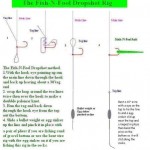
Let’s start with the basic rig. Most of the time when drop shotting I like to use 4 pound Maxima on my spinning reel. It’s abrasion resistant and surprisingly strong for such a light line. I use a 6-6 medium/light rod that has a soft tip with plenty of backbone. Originally the craze was to use the small Owner J hooks, aka Extra Wide gap hooks but since this technique has got popular they have made hooks especially for drop shotting called, what else, a drop shot hook. They pretty much look like a big salmon egg hook. I still use the extra wide gap hooks when I’m rigging my offering weedless, which I will go into detail more later.
Tie your hook on using the Palomar knot making sure you tie it by going through the point side of the hook, be sure to leave at least 2 to 3 feet of extra line on the free end, aka the tag end. The reason for this is because you will be attaching the weight to this “Leader”. Now the tricky part. After you have tied on your hook take the tag end and run it through the eye of the hook, point side first. This will allow your hook to stick basically straight out. By the way, the leader length just depends on how far off the bottom the fish are feeding so there is no “Written In Stone” length. Let the bass tell you Grasshopper. Try different lengths until you get bit and chances are you will continue to catch then with that length.
Next comes the weight. There are a whole lot of different ways and types of weights you can use, its all about preference. Of course they do have specialty, drop shot, sinkers but they can be a little spendy. I like to use either one of two methods. First is to tie a small snap swivel, this helps eliminate line twist, and attach a small casting sinker, bell weight. Another trick I use is under your hook squeeze a good sized split shot to your line, then tie a regular knot under it. With this setup if you get hung up on a rock or some other structure, with a little pressure, the knot will pull through the split shot and all you loose is your weight. I know there has been more than once when I have been shaking and pulling on the rig and the weight finally lets go I have had bass just blast the bait so be aware. My guess is the bass was watching this “Thing” shake around then attempt to flee all of the sudden and they just have to kill it.
I have also had luck with placing a jig on the tag end thereby giving the bass two different offerings to look at. The bad part about this is if you hook 2 bass at the same time on light line chances are you wont get both of them and if the one on the upper rig breaks your line you loose both fish as well as both rigs.
On a side note. The drop shot method is not strictly limited to light line, small baits and small hooks, it can be equally effective flipping into heavy brush with heavy line, big baits and of course big hooks rigged weedless.
Now lets discuss what type of baits does one use. Out here in California we generally use finesse stuff, small worms, reapers, jerk baits, eels, sculpin’s etc. Were talking the 3-4 inch variety. At times I’ll also toss 6 and 8 inch worms, so like I said nothing is the right way. Whichever you prefer and have confidence in then it’s the right one for you.
To rig your lure there are several different ways of hooking it up. I like the basic weedless method where the hook point is not exposed as well as the standard nose hooking. There is a right time and place for each rig so I’ll leave that up to you.
Ok, your probably thinking something like “Tell us how to fish this thing”, if you’ll hold on, that what I’m going to do next. This techniques works in all sorts of situations but really shines when the bite is tough. Why would someone want to slowly shake a worm when the fish are on a reaction bite? Me I would rather not. It works in deep and shallow water, in brush, in submerged rock piles, just about anywhere. You can cast out and shake back or you can watch your sonar and go vertical if you so desire. I think the biggest trick to fishing a drop shot is to fish it slow.
Cast it out, take up the slack but allow your weight to stay in contact with the bottom an shake it in place without moving the weight is the objective. This method also works on bedding bass. Again, cast it out, drag the weight into the bed and shake your bait without moving the weight. This drives the bass crazy, especially if your bait looks like a sunfish!
Generally speaking when a bass bites this rig it’s a very subtle bite. You feel pressure and the rod starts to load up or your lure starts to swim off, this is were the light action rod really pays off because the bass will feel some pressure but you will have time to set the hook, which by the way, in this situation is a very light hookset. Basically just reel the line tight and maybe give a little tug but keep reeling as fast as you can. Of course if the fish is taking drag you don’t want to reel against him, let him run but ALWAYS keep pressure on him. If he attempt’s to jump try sticking your rod tip into the water to avoid him jumping.
Try drop shotting the next time the fish just don’t want to cooperate and you will be pleasantly surprised.
Until Next Time, Good Luck and Tight Lines To Ya!
Spooning. No, I’m not talking about cuddling……
With your loved one. I’m talking about a fishing technique that is generally used during the colder winter months in deeper water but it can be equally effective anytime of the year and at any depth.
Lets start with the facts. During the colder winter months when the water temperature drops to about below 45 degrees, the semi annual shad die off occurs. It also occurs during the hot summer month’s when the water temp gets too warm for these little baitfish, at least these die offs happen out here in California. During these times spooning is a very effective way to catch the bass. I have also got on awesome catfish and Crappie bites with this technique as well. Basically, anything that eats shad will eat a spoon so be prepared to catch a whole bunch of different species of fish.
As far as tackle goes, I prefer a 6’6 medium action rod, a baitcaster reel spooled up with 8 pound Maxima. Some people prefer heavier line but I like the lighter stuff so I get a more natural fall from my spoon, besides that 8 pound Maxima is some very strong, abrasion resistant line.
There are many different spoons that work well for spooning. You do however want to select a jigging spoon not a top water or swimming spoon like a Johnson’s Silver Minnow. Some old reliable spoons are the Hopkins Shorties and Kastmasters in Silver or Gold or even the colored versions in ¼ to ½ ounce sizes. A word of caution, you will get line twist while spooning. One way to cut back considerably on the twist is to place a barrel swivel about 3-4 feet up your line from the spoon.
One word of caution. ALWAYS check the hooks! I have found that most of the hooks that come stock on spoons are not the greatest. At the very least sharpen them. I personally like to change mine out with custom dressed Diacchi Bleeding Series treble hooks. They add a flash of red , the “breathing” action from the customization and are incredibly sharp.
Now how do I use this rig? Spooning is most commonly performed vertically. You lower your bait straight down until it reaches the desired depth, most of the time the bottom, click the spool release closed and then you yo-yo it up and down. Always let the spoon fall on slack line but stay not too much slack, a controlled fall, because more often than not the fish will hit the spoon as it falls so if you see your line jump of if it does not take up the slack you already have out or if it takes more slack than you have let out, reel up until you feel pressure and set the hook.
Another way to use a jigging spoon is to cast it out, let it flutter to the bottom and hop it back to the boat, or shore line if bank fishing. I’ll let you in on one of my secrets for horizontal spooning. 2 words, Silver Buddy. One major drawback to doing this method is you can loose a whole boat load of spoons in a hurry hanging them up on the bottom.
A lot of times the fish will hit it on the fall and you wont realize you were even bit until you go to make another upward pull. When you pull upward, if you feel the fish, jerk it even harder to set the hook. You have to set the hook rather quickly when spooning because the bass will not hold onto basically a hunk of metal for to long before attempting to spit it out, This is where sharp will help out.
The speed and amount of the upward thrust depends on the fish and how far off the bottom they are feeding. Some times they want the yo-yo to go as high as you can raise the rod, some times just a few inches. The same applies to the speed at which you pull up the rod tip. Either rip the rod upwards or slowly pull it up or anywhere in between. Let the fish tell you how they want it.
Now the where. I would have to say one of the biggest secrets to successful spooning is to locate the balls of baitfish on your sonar unit. If you see streaks going through these balls that shows actively feeding fish and actively feeding fish is always a good thing. If you have a high enough resolution sonar with a quick enough refresh rate you can actually see your spoon yo-yoing up and down and watch the fish approach and attack it. While looking at the ball of bait fish look for marks below the ball very close to the bottom, those are usually fish waiting for the shad to die off, easy pickings. You may have to turn up the sensitivity on your sonar or zoom in on the bottom to reveal these fish because they are usually very close to the bottom and with the factory settings of most units they will just show up as tiny little humps on the bottom. Not all bait balls will have fish under them but if you follow it long enough the fish will show up. “Build it and they will come” ha!
A prime spot example would be where the bait are above some sort of structure, noticeable contour change, a bend in a creek channel, a rock pile, tree or that long tapering point. Bass tend to hold on structure so if the bait are around it the odds are very good that the bass will be there and they will feel.
However the above is not written in stone. I remember back prior to owning a boat I would pretty much blindly spoon during the winter months in my float tube. Of course I would dress for the occasion. Long Johns, a couple pairs of socks followed by neoprene waders as well as the old fashioned vinyl ones. Anyhow, I would go out and find structure with a jig and after locating it I would triangulate the spot with permanent landmarks and spoon away quite effectively I might add.
Next time your out give this technique a try. It just might surprise you.
Until Next Time, Good Luck and Tight Lines To Ya!
Fishing jigs
This post is about one of my favorite bass fishing techniques, Jig fishing. This is one of my confidence technique’s. I know every time I throw a jig I’m going to catch bass, and chances are, big ones at that.
I’ll start out talking about the different types and styles of jigs. First I’ll cover the lead head.
You’ve got weedless ones. All this means is they have a little fiber brush guard sticking up in front of the hook therefore when you pull the jig say through a tree the guard will deflect off the branch and usually not get hung up. I always modify the fiber guard to allow for easier hook sets. The way I modify mine is I first off I’ll trim them down so the tips are inline with the hook. Then I fan out the guard and thin it out some. I want to leave enough fibers to keep the jig weedless but not so it will interfere with the hookup.Of course one without the brush guard wouldn’t be considered weedless. These jigs are designer for more open water applications.
Next you’ve got the “Stand Up” jig heads. These generally have a flat bottom which is to say, if you drop the jig it should land on the flat side causing the hook to stand upright. Then you have the casting jigs which have a tapered style head. You have the basic round head. Then you have my favorite type, the football head. These are designed so when your jig bumps against a rock or some kind of structure they roll upward resembling a crawfish in a defensive position when you slowly raise your rod tip slightly.
Of course being out here in California I have to mention the finesse jigs. These little buggers can be down right deadly. About the only requirement a jig has to be considered a finesse jug is they have to be smaller than the standard bass jig. Most finesse jigs then to be made with round living rubber instead of the standard flat rubber or silicone. The original CA finesse jigs were the Skinny Bear jigs. I’m not sure if they still make them but I know I still have a box full of them and use them when the conditions call for them.
As far as colors of the jig heads, most people will say that it does not matter if their painted or not and for the most part its probably true, however, me personally, if I’m not fishing with a painted jig head I lack the confidence in it so therefore chances are I will not take the time to present it right. That’s why I prefer the painted ones, chances are its all in my head but I want my whole jig to look good.
The hook in the head is a very important part. Make sure your hook is sharp. I like the Bass Pro Shops football heads with the Gamakatsu hooks. These hooks are very strong and come stickey sharp right out of the package. If your jig hooks are dull make sure to sharpen them! Trust me, it will make a huge difference when you attempt to set the hook into the hard boney jaw of Mr. Bass.
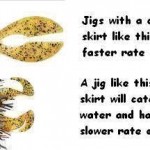
Now I’ll cover the different styles of skirts and trailers. On the skirts there of course are the good old fashioned rubber ones, the silicone ones, living rubber and the spider type rubber. For the trailers there are of course the soft plastic ones as well as the pork frogs.
One of my favorite jigs is a modified spider grub on a 1/4 or 3/8 ounce weedless football head. In my opinion this is a one very deadly combination. I like to take a Yamamoto Skirt in one color and put a twin tail grub behind it in a different color. I feel that this different color combo tends to appear more natural in the water. There is no perfect color, black. blue, purple, watermelon, brown and of course pumpkin are always good choices to consider.
As far as a rattle goes, this is yet another issue that is up for debate. Some say yes, some say no. As for me, I say sometimes. If I’m fishing in clear water there really is no need for one however in dirty water where visibility is not very good then I say yes. I like the small glass rattle inserts that you push into the body. The sound is kind of muffled yet it is audible so the bass can gear the sound, locate the lure, take a look at it and eat it..
Scent. I say yes! I even use crawfish scent on my jigs. Is it really needed? Again, some say no but I don’t care. I do know that the scent does mask the human odor. Does the bass know exactly what human odor is? I really don’t think so but I do feel that it is not a natural smell to them. A smell that is not naturally in their environment, so it might make them leery of your offering. I also believe that with scent the bass will hold onto your jig longer giving you more time to set the hook.
One way I like to fish jigs in “Open” water is to toss them out to that “Secret” rock pile or that bend in the old river channel and slowly crawl them back and shake them along the way. Every now and then hop them but for the most part, it’s a slow crawl and shake, like a crawfish crawling along the bottom. The shaking is when I come in contact with some structure, remember I mentioned that I like using the football head style jig heads.
Another way I enjoy using them is around trees or brush. Here you want to resemble a crawfish crawling around in a tree or trying to root in the mud down around the base of the tree.
So far all I have been discussing concerning jigs has been directed at imitating crawfish. There is however another use for jigs and that’s imitating baitfish and swimming the jig. When imitating bait fish I’ll use a white jig head, white or a silver/white combination to imitate shad and a chartruse/white combination to resemble perch or sunfish and the same color trailers except I prefer the single tail grub versus the twin tail that I use when imitating crayfish. The technique here is you want to toss your jig out and swim it back, pause and go, etc, until you figure out just how the bass want it.
I have found that most jig bites tend to be very light, most time all you feel is pressure, sometimes the bass will swim out of the structure towards you and all of the sudden you have allot of slack in the line. Then there are times when all you’ll see is your line jump and start to move off. Don’t be asleep at the reel! Take up the slack and set the hook hard enough to cross his eyes.
Give jigs a try. I’m pretty sure you’ll be happy with the results.
Until Next Time, Good Luck and Tight Lines To Ya!